EPIC
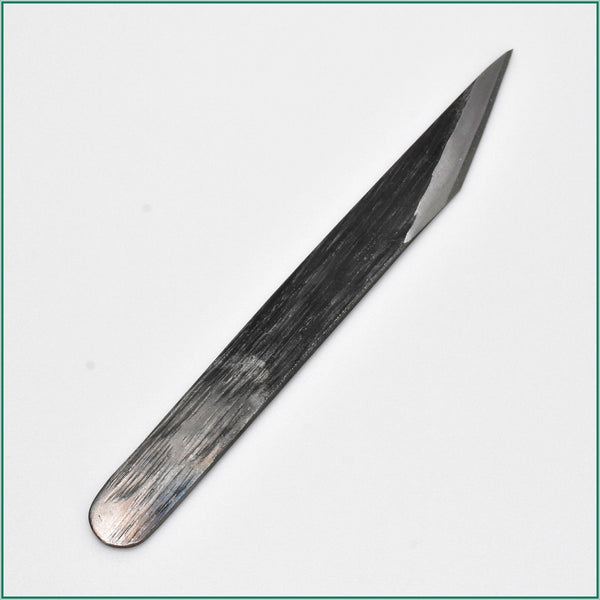
KIRIDASHI 18MM - BLUE STEEL KUROUCHI
KIRIDASHI·MARKING + PRECISION


 Sale
Sale
Aogami · Kurouchi · 51 g
In stock · Ships from Prague
Every blade on this site gets its own trading card - tier-colored, kamon-stamped, and built around the seven specs that actually predict how the knife behaves on the line. Steel. Hardness. Edge. Length. Handle. Finish. Origin.
it's great for everyday cutting and chipping if foods but also for non food items as well.
Reviews come from customers who bought this product from us. Everyone who writes one gets 10 EUR store credit for their order, whatever the rating, and we publish them as written. Bought it? Write a review.
A marking knife. Single piece of hardened tool steel, ground to a chisel edge on one corner, with no separate handle - the body is the handle.
Used for precision work that asks too much of a paring knife: scoring nori, trimming maki ends square, cutting paper-thin garnish, marking fish skin before a slice. Tucks into a chef's roll alongside the bigger blades.
Where a kiridashi earns its placeWipe between cuts of acidic ingredients. Apply tsubaki oil after deep cleans. A grey patina develops within weeks - that's the carbon protecting itself.
Where this blade earns its keep - and where it's the wrong tool.
Warm water + a soft sponge. No dishwasher, ever - the heat warps the handle and the detergent eats the edge.
Wipe to bone-dry the moment it leaves the sink. Standing water is the enemy - even on stainless.
Carbon steel rusts on contact with water. Wipe to bone-dry, then a thin pass of camellia (tsubaki) oil along the blade.
Patina will develop in weeks. Embrace it - that's the steel protecting itself.
A 1000-grit waterstone every few weeks. Stropping between for a longer life on the edge.
A saya for storage. A stone for the edge. An oil for the steel.
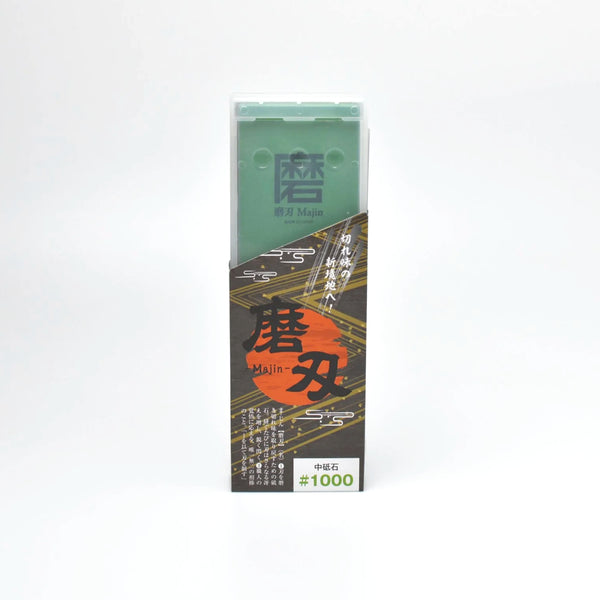
1000-grit waterstone. The workhorse grit for kitchen edges.
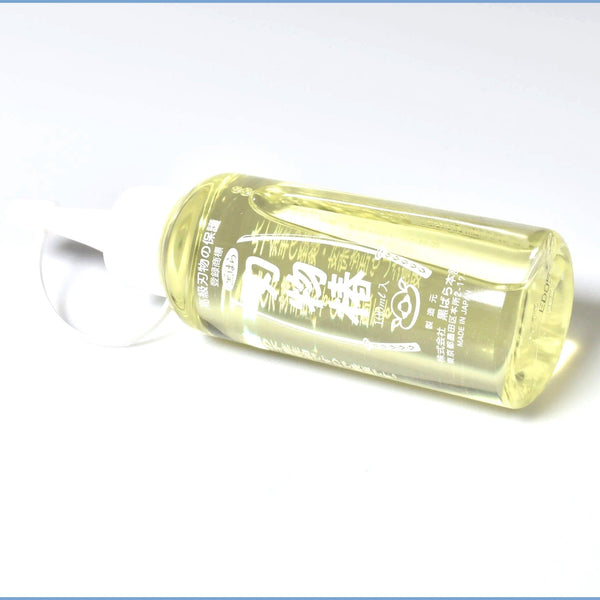
Camellia (tsubaki) oil. Food-safe. A thin pass keeps the steel quiet.

“Kiridashi 18mm - Blue Steel Kurouchi is a purpose-built Japanese kitchen blade. Aogami #2 holds the deep, biting edge that only Japanese carbon delivers, running at HRC 61-63. In the kitchen, that means it earned its geometry the way every Japanese profile does - because a working kitchen demanded it. It sits in our catalog because it earns its keep on a working line, the geometry is honest, and the steel is what the maker said it is. We've held it. That's what gets a knife on this site. ”
- Ethan
Yes - it's high-carbon steel. Wipe between cuts, dry fully after washing, and apply a thin pass of camellia oil after deep cleans. A patina will develop within weeks; that's the steel protecting itself.
No knife you care about should go in a dishwasher. The heat warps the handle, the detergent dulls the edge, and clattering against other dishes chips the bevel. Hand-wash with warm water and a soft sponge, then dry immediately.
HRC stands for "Rockwell Hardness, scale C" - a measurement of how hard the steel is. Higher numbers mean the steel holds an edge longer but is also more brittle. This knife is 61-63 HRC, which is the working sweet spot for Japanese kitchen blades.
Different routine from a kitchen knife. The kiridashi is a chisel grind - one bevel on the front, flat back. Grind only the front bevel against a 1000-grit waterstone, following the angle the maker set (usually steeper than kitchen single-bevels, around 25-30 degrees). Full-length strokes, light pressure, until you raise a burr. To remove the burr: lay the FLAT back of the blade against a fine finishing stone (5000+ grit) and pull it once or twice with zero angle. The back stays flat forever - no hollow, no angle. Strop on leather if you want a polished finish.
We ship from our EU warehouse in Prague. Free across the EU on orders over 2.000 Kč, ~3-5 business days. Outside EU: standard rates apply, customs handled at destination. Tracking on every order.
30 days, no questions asked. Ship it back, we refund. Damage from misuse (hitting bone, frozen food, dropping) isn't covered - but normal 'this isn't right for me' is. Email office@smartsushichef.com to start.
Sale
 Sale
Sale
Pick one more to compare side by side.
