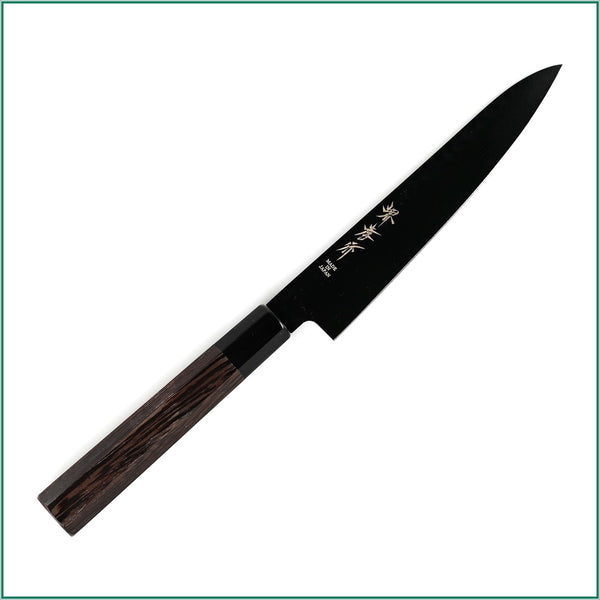
Japanese knives

Twelve blades.
One that's yours.

The Japanese knife family didn't get this big by accident. Each shape exists because a working kitchen demanded it. Here are the twelve you'll meet on this site, what each one does, and how to pick the right one.

Newest blades
MAGIC

KOKUSHIN SUJIHIKI 240MM

Kokushin Sujihiki 240mm
SUJIHIKI·SLICING + SASHIMI
Steel
VG11
Hardness
60-62
Edge
Double Bevel
Handle
Fine Wood
Grip
Octagonal
Finish
Tsuchime damascus
Origin
Japan
Weight
147 g
Length
240 mm
Tier
Magic

“Black-core damascus. Kokushin β€” the dark heart held inside the folded layers.”

KOKUSHIN SUJIHIKI 240MM

“Black-core damascus. Kokushin β€” the dark heart held inside the folded layers.”

MAGIC

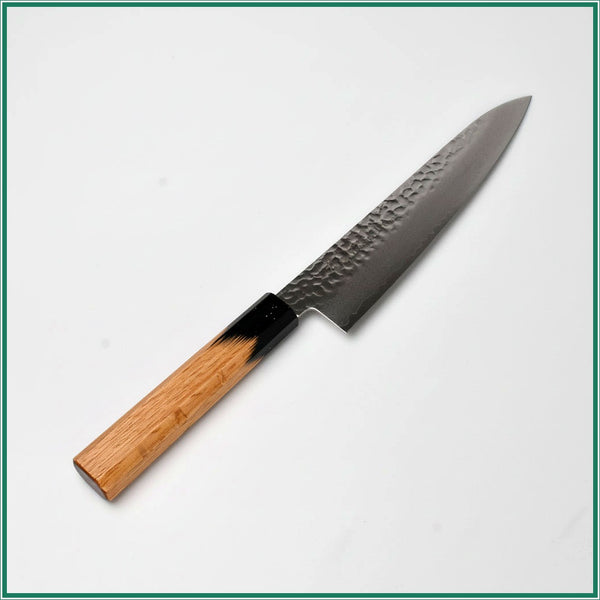
KOKUSHIN GYUTO 210MM

Kokushin Gyuto 210mm
GYUTO·ALL-PURPOSE CHEF
Steel
VG10
Hardness
60-61
Edge
Double Bevel
Handle
Fine Wood
Grip
Octagonal
Finish
Tsuchime damascus
Origin
Japan
Weight
160 g
Length
210 mm
Tier
Magic

“The damascus gyuto, hammered and folded. Workhorse dressed in pattern.”

KOKUSHIN GYUTO 210MM

“The damascus gyuto, hammered and folded. Workhorse dressed in pattern.”

MAGIC

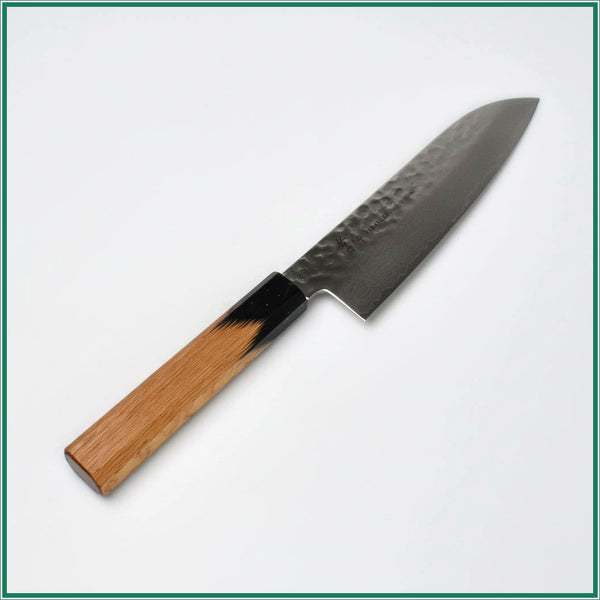
KOKUSHIN SANTOKU 180MM

Kokushin Santoku 180mm
SANTOKU·THREE VIRTUES
Steel
VG10
Hardness
60-61
Edge
Double Bevel
Handle
Fine Wood
Grip
Octagonal
Finish
Tsuchime damascus
Origin
Japan
Weight
150 g
Length
180 mm
Tier
Magic

“Vegetable, fish, meat β€” santoku for all three. Hammered damascus, hard core.”

KOKUSHIN SANTOKU 180MM

“Vegetable, fish, meat β€” santoku for all three. Hammered damascus, hard core.”

LEGENDARY

KUROKAGE SUJIHIKI 240MM

Kurokage Sujihiki 240mm
SUJIHIKI·SLICING + SASHIMI
Steel
VG10
Hardness
60-61
Edge
Double Bevel
Handle
Dark Wood
Grip
Octagonal
Finish
Kurouchi
Origin
Japan
Weight
145 g
Length
240 mm
Tier
Legendary

“Long, lean, black-forged. The Kurokage line carrying its name in the finish.”

KUROKAGE SUJIHIKI 240MM

“Long, lean, black-forged. The Kurokage line carrying its name in the finish.”

MAGIC

KUROKAGE PETTY 150MM

Kurokage Petty 150mm
PETTY·ALL-PURPOSE UTILITY
Steel
VG10
Hardness
60-61
Edge
Double Bevel
Handle
Dark Wood
Grip
Octagonal
Finish
Kurouchi
Origin
Japan
Weight
85 g
Length
150 mm
Tier
Magic

“Black-forged scale over a VG-10 core. The forge left its mark on purpose.”

KUROKAGE PETTY 150MM

“Black-forged scale over a VG-10 core. The forge left its mark on purpose.”

MAGIC

KEIDO-SUGIHARA PETTY 80MM

Keido-Sugihara Petty 80mm
PETTY·GARNISH + PARING
Steel
VG10
Hardness
60-61
Edge
Double Bevel
Handle
Desert Ironwood
Grip
Western
Finish
Tsuchime damascus
Origin
Japan
Weight
64 g
Length
80 mm
Tier
Magic

“Eighty millimeters of damascus and desert ironwood. Small statement, sharp point.”

KEIDO-SUGIHARA PETTY 80MM

“Eighty millimeters of damascus and desert ironwood. Small statement, sharp point.”

RARE

SUMIRE GYUTO 180MM

Sumire Gyuto 180mm
GYUTO·COMPACT CHEF
Steel
VG10
Hardness
60-61
Edge
Double Bevel
Handle
Pakka Wood
Grip
Western
Finish
Migaki
Origin
Japan
Weight
115 g
Length
180 mm
Tier
Rare

“A short gyuto for tight stations. VG-10 stainless, balanced under the bolster.”

SUMIRE GYUTO 180MM

“A short gyuto for tight stations. VG-10 stainless, balanced under the bolster.”

RARE

SUMIRE PETTY 135MM

Sumire Petty 135mm
PETTY·PRECISION UTILITY
Steel
VG10
Hardness
60-61
Edge
Double Bevel
Handle
Pakka Wood
Grip
Western
Finish
Migaki
Origin
Japan
Weight
64 g
Length
135 mm
Tier
Rare

“Compact and keen. VG-10 stainless held to a working chef's tolerance.”

SUMIRE PETTY 135MM

“Compact and keen. VG-10 stainless held to a working chef's tolerance.”

First decision

Single-bevel or double-bevel?

Before shape, before size, before steel: this is the choice. It splits the Japanese knife family in half and decides what the blade is for.

Double-bevel δΈ‘εˆƒ

Sharpened on both sides at a symmetric angle (typically 15-18 degrees per side). The Western standard, also dominant in modern Japanese kitchens. Cuts straight down.

Strengths
  • +Ambidextrous, works in any hand
  • +Easier to learn to sharpen
  • +Versatile across protein, vegetable, herb
  • +The geometry most modern chefs already know
Trade-offs
  • -Slightly thicker edge than single-bevel
  • -Doesn't draw through fish as cleanly as a yanagiba
Best for: almost everything. Gyuto, santoku, bunka, petty, nakiri, sujihiki, honesuki are all double-bevel.
Single-bevel η‰‡εˆƒ

Ground to a sharp angle on one side; the other side is flat or slightly concave. Hand-specific (right-handed or left-handed). What sushi was invented around. The keenest edges on earth.

Strengths
  • +Far sharper at peak than any double-bevel, by geometry
  • +Glides through fish without tearing cell walls
  • +Surface of the cut stays glossy, the look that defines sashimi
  • +Tradition: this is what a Japanese apprentice learns on
Trade-offs
  • -Hand-specific, you can't share it with a left-handed colleague
  • -Steeper learning curve to sharpen properly
  • -Specialist: not a daily-driver chef knife
Best for: serious sushi/sashimi work. Yanagiba, deba, usuba are the three traditional single-bevels.
Group 1 of 3

The blades sushi was invented around.

Three single-bevel knives. Each one does a single job, and does it better than any double-bevel ever could.

Yanagiba ζŸ³εˆƒ
Single-bevel

The sashimi knife. Long, slim, single-bevelled, designed to draw through fish in a single uninterrupted pull from heel to tip. The geometry suppresses surface tearing so the cut surface stays glossy.

Best for: sashimi, nigiri toppings, any portion of fish that goes on a plate raw.
Browse yanagiba →
Deba ε‡Ίεˆƒ
Single-bevel

The fish butchery knife. Thick spine, heavy, single-bevelled. Built to cleave through bone and cartilage without chipping the edge. Weight does the work, let the blade fall.

Best for: breaking down whole fish. The deba does the butchery so the yanagiba can do the finishing.
Browse deba →
Usuba θ–„εˆƒ
Single-bevel

The vegetable knife. Tall, flat, single-bevelled, the blade that makes katsuramuki possible: a daikon peeled into a single continuous sheet of vegetable. Push-cut only, no rocking.

Best for: Japanese-style vegetable work. Decorative cuts, tsuma, garnish at sashimi precision.
Browse usuba →
Group 2 of 3

If you only own one.

Four double-bevel knives that handle most of what a kitchen throws at them. If you're starting your Japanese knife collection, start here.

Gyuto η‰›εˆ€
Double-bevel

The Japanese chef knife. Curved belly for rocking, pointed tip for fine work, mid-height blade. The most versatile blade in any kit: proteins, vegetables, herbs, anything that fits on the board.

Best for: everything. If you buy one Japanese knife, this is it.
Browse gyuto →
Santoku δΈ‰εΎ³
Double-bevel

Three virtues, fish, meat, vegetable. A shorter, flatter blade than the gyuto, with a sheep-foot tip that protects the cutting hand. Push-cut friendly. Easier to handle in a home-sized kitchen.

Best for: the home cook. The Japanese answer to the Western chef knife.
Browse santoku →
Bunka ζ–‡εŒ–
Double-bevel

Versatile all-purpose blade with a reverse-tanto K-tip. Santoku-sized body with a sharp angled tip that controls fine work like no flat-belly knife can. The home cook's do-it-all knife with character.

Best for: cooks who want santoku versatility plus a tip that handles fine slicing and scoring.
Browse bunka →
Kiritsuke εˆ‡δ»˜
Double-bevel

The hybrid. Gyuto length, yanagiba spirit, K-tip, the angled chisel point that gives the kiritsuke its silhouette. Traditionally a head-chef's blade in a Japanese kitchen, earned, not bought.

Best for: confident cooks wanting a long all-purpose knife with character.
Browse kiritsuke →
Group 3 of 3

Tools that earn their place.

Five double-bevel specialists. None of them is your first knife. All of them solve a specific problem better than anything else in the rack.

Sujihiki η­‹εΌ•
Double-bevel

The double-bevel slicer. A yanagiba's geometry rebuilt for Western kitchens. Long enough to draw through a roast in one pass. Narrow enough to glide between bone and meat.

Best for: brisket, prime rib, roasts, fish carved Western-style. The closest a double-bevel gets to single-bevel finesse.
Browse sujihiki →
Nakiri θœεˆ‡
Double-bevel

The double-bevel vegetable knife. Flat edge, square tip, no curve, built for push-cuts on a board. A daily-driver answer to the usuba: less ceremonial, easier to maintain, just as effective.

Best for: home cooks who do a lot of vegetable prep and don't want to learn single-bevel sharpening.
Browse nakiri →
Petty γƒšγƒ†γ‚£
Double-bevel

The utility knife. Short, pointed, agile, for jobs that ask too much of a paring knife and too little of a gyuto. The blade that lives on the second cutting board.

Best for: mincing shallots, segmenting citrus, trimming a fillet. The companion to a gyuto.
Browse petty →
Honesuki ιͺ¨γ‚Ήγ‚­
Double-bevel

The Japanese boning knife. Sharply pointed tip, triangular profile, rigid spine, built to part poultry at the joint without sawing.

Best for: breaking down whole birds. Also rabbit, small game, fine fish butchery where deba is too heavy.
Browse honesuki →
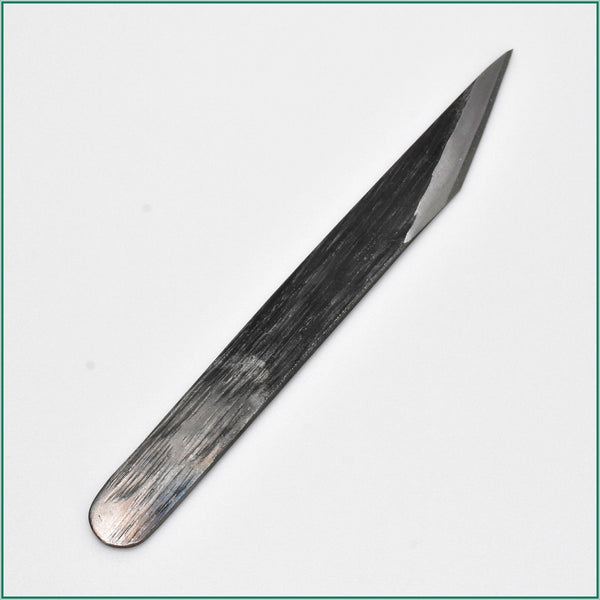
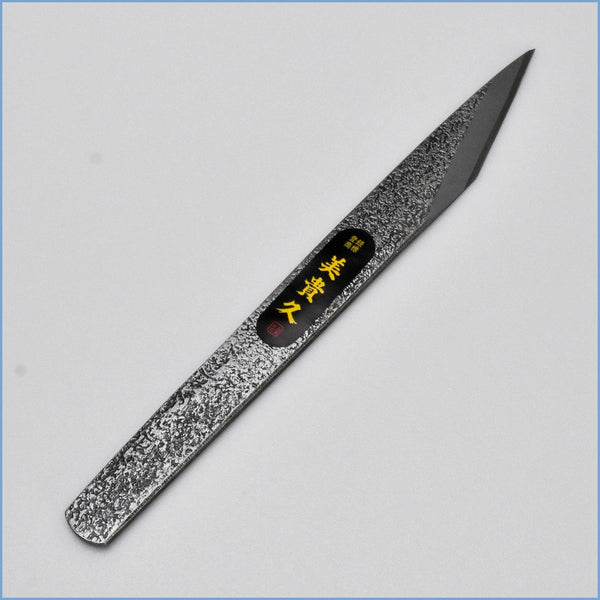
Kiridashi εˆ‡ε‡Ίε°εˆ€
Single-bevel

A marking knife. Single piece of hardened tool steel, ground to a chisel edge, no separate handle. Precision work that asks too much of a paring knife.

Best for: scoring nori, trimming maki ends square, marking fish skin before a slice.
Browse kiridashi →
Not sure?

Ask a working chef.

Email us with a photo of the knife you currently use and the work you do most. We'll point you at the right blade for your kitchen, off the catalogue, no upsell pressure.

Email Ethan
Cheat sheet

If you do this, get that.

A short version, for cooks who don't want to read all twelve cards.

If: Mostly home cooking, want one knife
Get: Gyuto (or santoku if your kitchen is small)
If: Sushi or sashimi, serious about it
Get: Yanagiba, plus a deba if you butcher whole fish
If: Lots of vegetable prep
Get: Nakiri (or usuba if you want to learn single-bevel)
If: A versatile knife with character
Get: Bunka or kiritsuke
If: Carving roasts, slicing brisket, Western proteins
Get: Sujihiki
If: Breaking down whole poultry
Get: Honesuki
If: Detail and finishing work
Get: Petty as the second knife on the board, kiridashi for scoring and marking
How we curate

Knives we'd put on the line.

Every knife in our catalogue has been used by Ethan in a working sushi kitchen before it hit the site. We source from traditional makers in Sakai and Seki, plus a small group of newer-generation smiths working with powder steels.

We don't carry every brand, only the ones that earn the rack. If a maker's quality slips, we drop them.

Now you've picked the shape

Pick the steel.

Carbon, stainless, powder. Twenty-plus alloys, one chart that shows you what each one is good at and where it falls short. The honest version, no marketing language.

The Steel Guide

Ready to shop?

Every blade above, plus the steels, the smiths, the prices. The full catalogue.

Shop the Knives