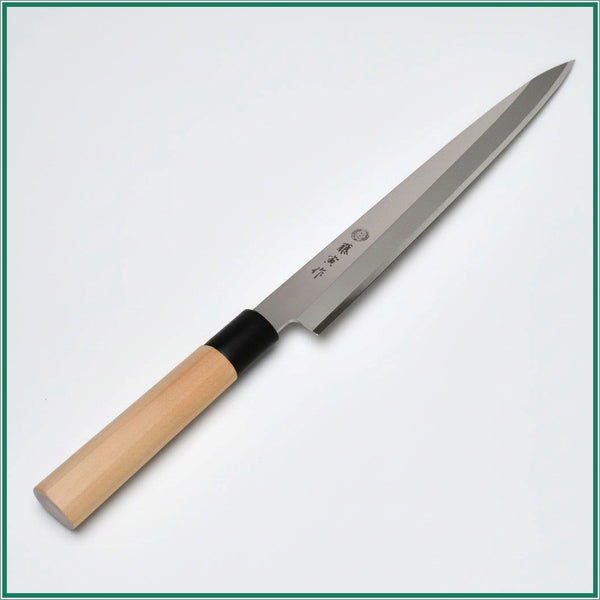
Every blade on this site gets its own trading card - tier-colored, kamon-stamped,
and built around the seven specs that actually predict how the knife behaves on the
line. Steel. Hardness. Edge. Length. Handle. Finish. Origin.
LEGENDARY
KUROKAGE SUJIHIKI 240MM
SUJIHIKI·SLICING + SASHIMI
Steel
VG10
Hardness
60-61
Edge
Double Bevel
Handle
Dark Wood
Grip
Octagonal
Finish
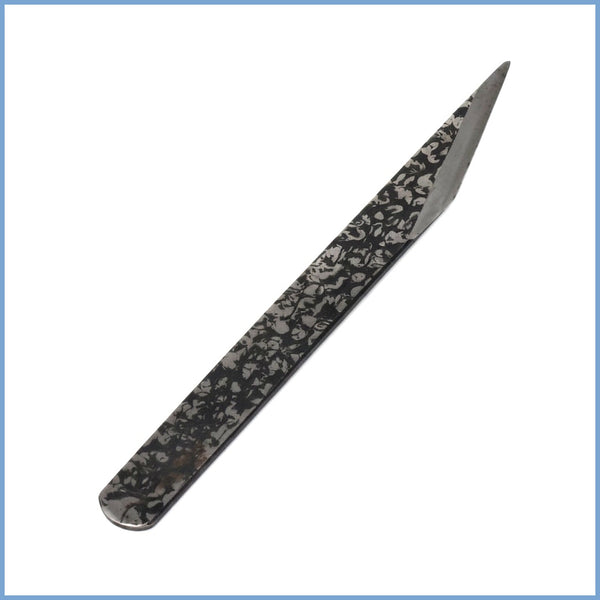
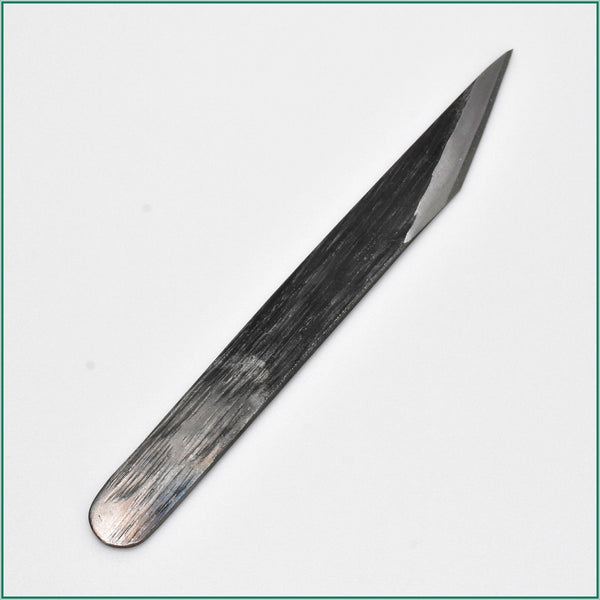
Kurouchi
Origin
Japan
Weight
145 g
Length
240 mm
Tier
Legendary
“Long, lean, black-forged. The Kurokage line carrying its name in the finish.”
KUROKAGE SUJIHIKI 240MM
“Long, lean, black-forged. The Kurokage line carrying its name in the finish.”
Anatomy
Why this shape.
Blade length240 mm
Sujihiki筋引
The double-bevel slicer. A yanagiba's geometry rebuilt for Western kitchens - fish, brisket, prime rib, roasts.
Long enough to draw through a roast in one pass. Narrow enough to glide between bone and meat. The closest a double-bevel knife gets to single-bevel finesse.
Eight flat sides give the blade vertical alignment in your grip. The dominant Japanese kitchen handle - the one professional chefs reach for first.
Ambidextrous. Comfortable in any grip style - pinch, hammer, or finger-tip. The geometry tells your hand where the edge is pointing without looking down.
Liquid error (templates/product.knife line 63): Could not find asset snippets/ssc-pdp-steel.liquid
Who it's for
The honest answer.
Where this blade earns its keep - and where it's the wrong tool.
Long proteins + sashimi-style cuts
+Brisket, roasts, hams
+Salmon side filleting
+Beef tenderloin + striploin
−Veg + herbs - too long + narrow, use a gyuto
Restaurant carving station, serious roasts
+Bigger workspace (50cm+)
+Carving + portioning station
+Double-bevel users with good stone practice
−Mostly veg work - wrong tool, gyuto or santoku
Pull-cut, single stroke
+Heel-to-tip in one pass
+Glides between bone + meat
+Light hand, blade weight does the work
−Push-cuts + chopping - wrong direction
Care & sharpening
Four habits and it lasts a lifetime.
01
Wash by hand
Warm water + a soft sponge. No dishwasher, ever - the heat warps the handle and the detergent eats the edge.
02
Dry immediately
Wipe to bone-dry the moment it leaves the sink. Standing water is the enemy - even on stainless.
03
Oil if storing long-term
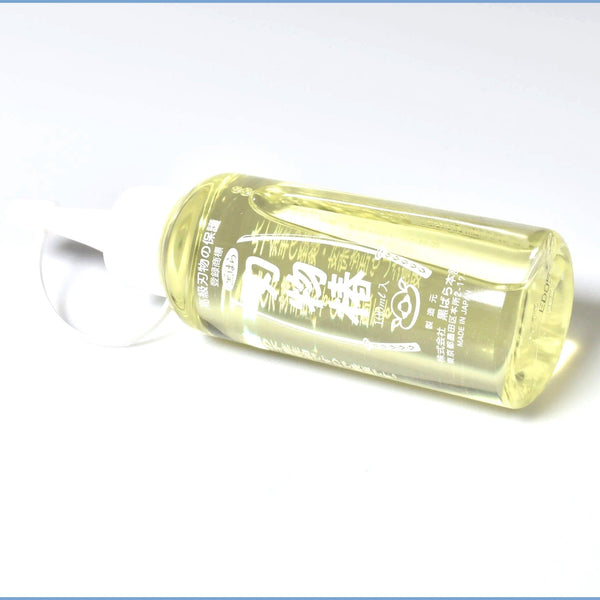
Stainless doesn't need daily oiling. If you're putting it away for more than a month, a thin pass of camellia oil keeps the steel happy.
Daily use: dry and rack. No oil required.
04
Sharpen on a stone
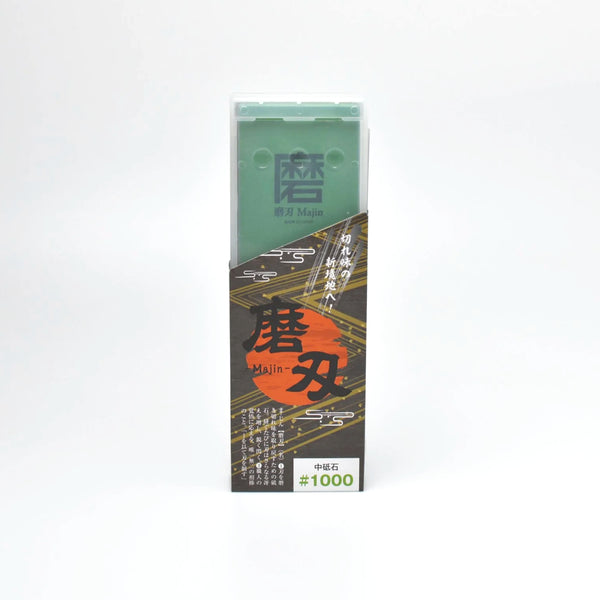
A 1000-grit waterstone every few weeks. Stropping between for a longer life on the edge.
Goes with
Made for this knife.
A saya for storage. A stone for the edge. An oil for the steel.
Camellia (tsubaki) oil. Food-safe. A thin pass keeps the steel quiet.
369,00 Kč
A note from us
Why we picked it.
Ethan Founder · Smart Sushi Chef
“Kurokage Sujihiki 240mm is the double-bevel slicer - long-bladed, narrow-spined, built for one long pull. VG-10 holds the edge like carbon but forgives the morning sink, running at HRC 60-61. In the kitchen, that means it carves a roast or fillets a side of salmon in a single stroke without sawing. It sits in our catalog because it earns its keep on a working line, the geometry is honest, and the steel is what the maker said it is. We've held it. That's what gets a knife on this site.
”
- Ethan
Questions we get
Before you buy.
Is this knife stainless?+
Yes - the chromium content in the steel passes a thin oxide layer over the surface that resists rust under normal kitchen use. You still hand-wash and dry it like any good knife (no dishwasher, no soaking), but you don't need the daily oil-wipe routine a carbon blade needs.
Can I put it in the dishwasher?+
No knife you care about should go in a dishwasher. The heat warps the handle, the detergent dulls the edge, and clattering against other dishes chips the bevel. Hand-wash with warm water and a soft sponge, then dry immediately.
What does HRC 60-61 mean?+
HRC stands for "Rockwell Hardness, scale C" - a measurement of how hard the steel is. Higher numbers mean the steel holds an edge longer but is also more brittle. This knife is 60-61 HRC, which is the working sweet spot for Japanese kitchen blades.
How do I sharpen it?+
Use a Japanese waterstone. 1000-grit for regular sharpening, 5000-grit for finishing. Soak the stone if it needs soaking (most modern Shapton-style stones are splash-and-go), hold the blade at around a 15-degree angle to the stone (a folded coin makes a decent gauge), grind one bevel until you raise a burr along the entire edge, flip and do the other side. Finish with light alternating strokes to remove the burr. Steer clear of pull-through sharpeners - they tear the edge.
Where do you ship?+
We ship from our EU warehouse in Prague. Free across the EU on orders over €80, ~3-5 business days. Outside EU: standard rates apply, customs handled at destination. Tracking on every order.
What if it doesn't feel right?+
30 days, no questions asked. Ship it back, we refund. Damage from misuse (hitting bone, frozen food, dropping) isn't covered - but normal 'this isn't right for me' is. Email office@smartsushichef.com to start.