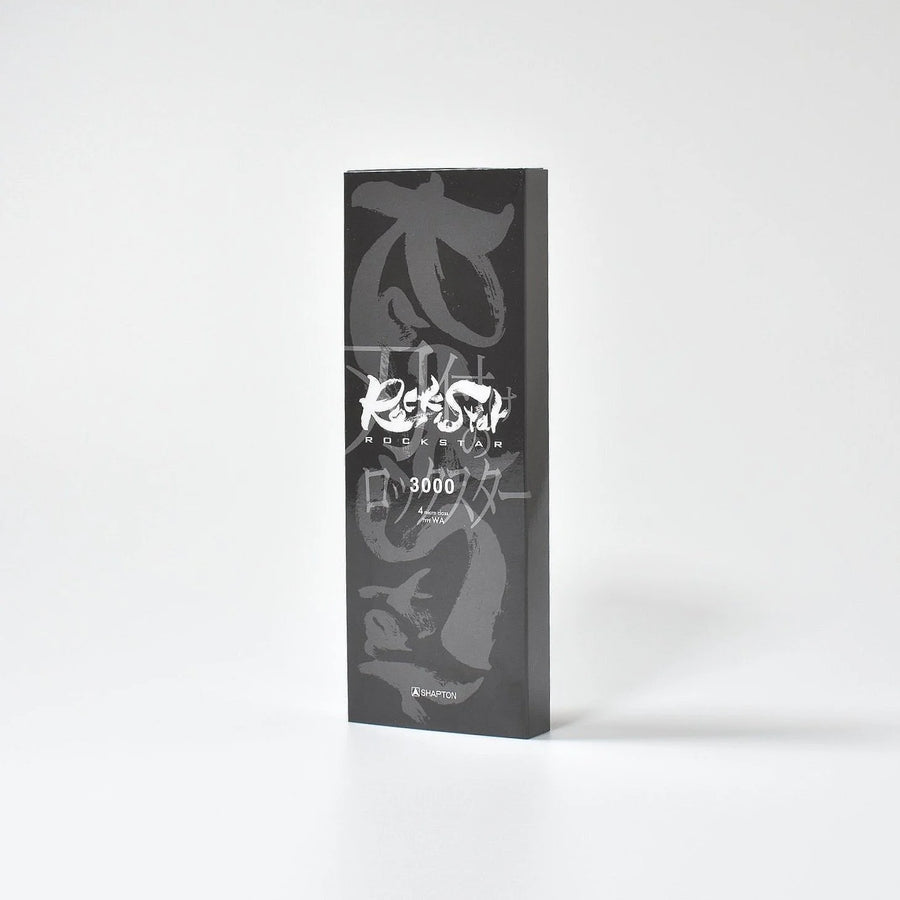
Shapton RockStar 3000 Grit
Description
Shapton RockStar 3000 Grit - a fast-cutting finishing stone that produces a polished, hair-shaving edge.
Shapton's RockStar series uses a harder binder than traditional waterstones - the result is a stone that cuts faster, domes less, and requires no soaking. The 3000 grit sits between sharpening and polishing: it removes the wire edge from a 1000-grit session and brings the blade to a refined, kitchen-ready finish.
- Grit: 3000
- Type: Splash-and-go (no soaking required)
- Best for: After 1000-grit sharpening, before stropping
- Works on: Carbon steel, stainless, single and double bevel
- Care: Rinse and dry after use, flatten periodically
Make it last.
- Soak sintered stones 10-15 min before use, until bubbles stop rising
- Splash-and-go ceramic stones just need a wet surface
- Don't store wet - dry thoroughly after every session
- Flatten every 5-10 sessions using a flattening plate or 220-grit paper on glass
- Use light pressure on finishing strokes to remove the burr cleanly
- Don't lean hard - heavy pressure dishes the stone faster, it doesn't sharpen faster
Before you buy.
What grit do I need?
A 1000-grit stone is the working sweet spot - it removes a dulled edge in minutes and finishes sharp enough for kitchen use. Add a 3000-6000 stone if you want a polished, hair-splitting finish. A coarse 240-400 stone is only needed if you've chipped a blade.
How long do I soak it?
Splash-and-go stones (most modern ceramic-bonded) just need surface-wetting. Traditional sintered stones soak for 10-15 minutes before use - until bubbles stop rising. Never store wet: dry the stone after each session.
Will this stone work on stainless and carbon both?
Yes. The difference between sharpening carbon and stainless is in technique, not the stone. Powder-metallurgy steels (SG2, M390, S35VN) sharpen much faster on diamond plates than waterstones.
Do I need to flatten the stone?
Yes - waterstones dish (concave) with use. Check flatness every 5-10 sharpening sessions by drawing a pencil grid on the stone and rubbing it on a flattening plate or 220-grit sandpaper laid on glass. Stop when the grid is fully gone.
What if I've never sharpened before?
Start with a 1000-grit stone, a 15-degree guide (two stacked coins under the spine gets you close), and a knife you don't love. Both bevels, alternating strokes, light pressure, finishing with the lightest possible passes to remove the burr. The first knife you sharpen will take 20 minutes; the tenth will take 5.

More from Whetstones
View all