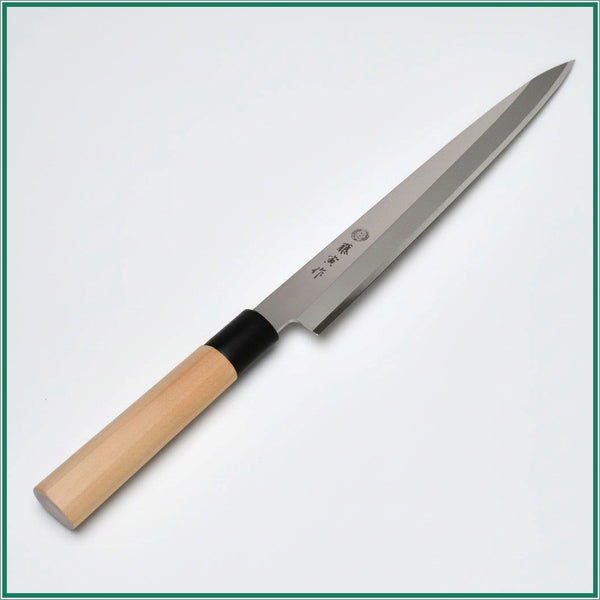
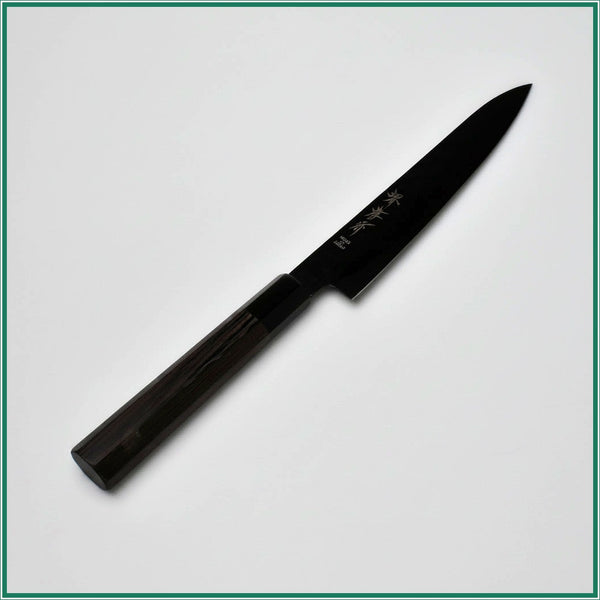
Every blade on this site gets its own trading card - tier-colored, kamon-stamped,
and built around the seven specs that actually predict how the knife behaves on the
line. Steel. Hardness. Edge. Length. Handle. Finish. Origin.
RARE
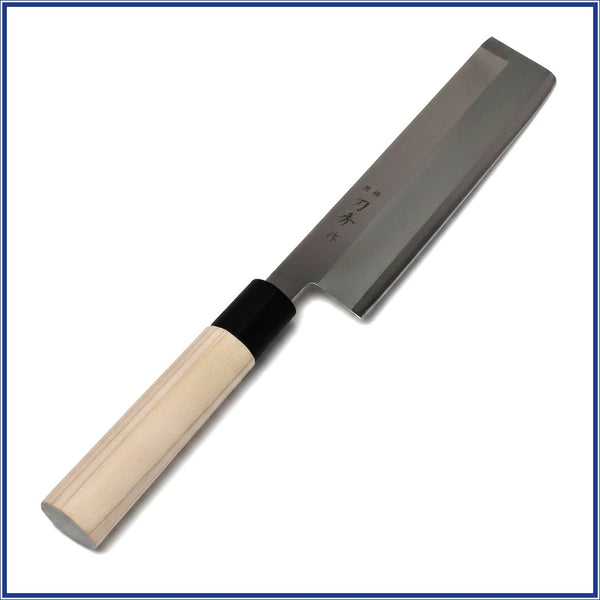
TOSHU USUBA 180MM
USUBA·VEGETABLE CUTS
Steel
Molybdenum Vanadium
Hardness
56-58
Edge
Single Bevel
Handle
Magnolia Wood
Grip
D-Shape
Finish
Migaki
Origin
Japan
Weight
197 g
Length
180 mm
Tier
Rare
“Squared profile, single bevel — the right geometry for katsuramuki.”
TOSHU USUBA 180MM
“Squared profile, single bevel — the right geometry for katsuramuki.”
Anatomy
Why this shape.
Blade length180 mm
Usuba薄刃
The vegetable knife. Tall, flat, single-bevelled - the blade that makes katsuramuki possible (a daikon peeled into a single continuous sheet of vegetable).
Flat edge demands board contact, not rocking. A traditional Japanese kitchen tool that rewards practice - and ruthlessly punishes a tired wrist.
Asymmetric. One side is smooth and round under the palm; the other carries a subtle ridge that lands beneath the index finger.
Hand-specific - these blades are forged right-handed or left-handed. The ridge gives exceptional tactile feedback for precise cuts. The traditional choice for single-bevel knives.
Liquid error (templates/product.knife line 63): Could not find asset snippets/ssc-pdp-steel.liquid
Who it's for
The honest answer.
Where this blade earns its keep - and where it's the wrong tool.
Vegetables, only vegetables
+Katsuramuki (continuous daikon sheet)
+Vegetable carving + decoration
+Paper-thin slicing
−Protein, fish, bone - wrong knife, wrong geometry
Sushi-trained or serious dedicated user
+Single-bevel sharpening practice
+Vegetable-focused menu
+Eastern (Kanto) traditional kitchen
−General home use - overkill + unforgiving, look at a nakiri instead
Push-cut, board-contact
+Flat edge stays on the board
+Tall blade gives knuckle clearance
+Slow, deliberate cuts
−Rocking + chopping - wrong tool, the geometry fights back
Care & sharpening
Four habits and it lasts a lifetime.
01
Wash by hand
Warm water + a soft sponge. No dishwasher, ever - the heat warps the handle and the detergent eats the edge.
02
Dry immediately
Wipe to bone-dry the moment it leaves the sink. Standing water is the enemy - even on stainless.
03
Oil if storing long-term
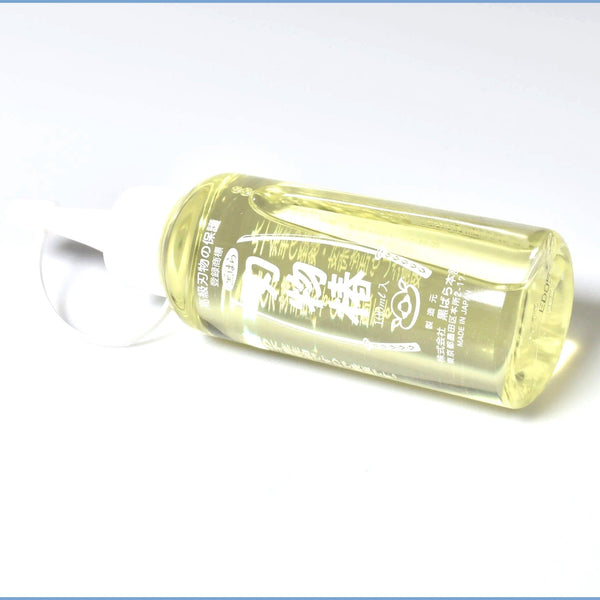
Stainless doesn't need daily oiling. If you're putting it away for more than a month, a thin pass of camellia oil keeps the steel happy.
Daily use: dry and rack. No oil required.
04
Sharpen on a stone
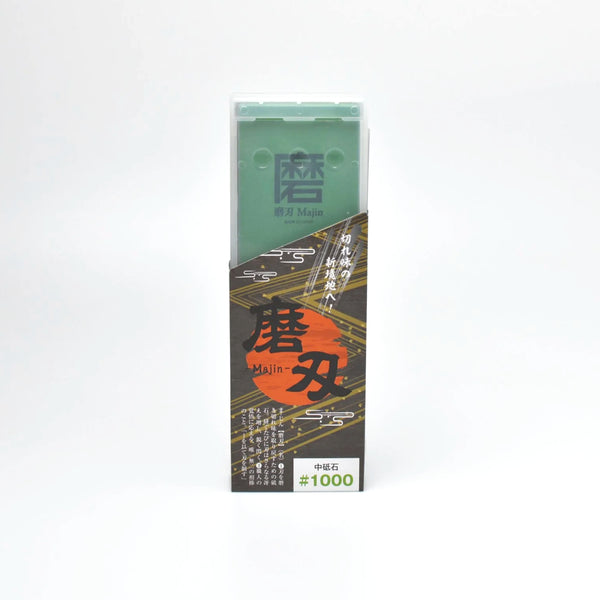
A 1000-grit waterstone every few weeks. Stropping between for a longer life on the edge.
Goes with
Made for this knife.
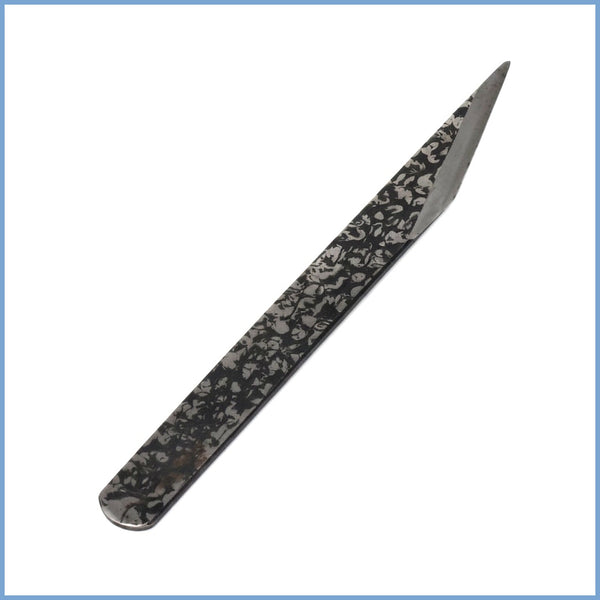
A saya for storage. A stone for the edge. An oil for the steel.
Camellia (tsubaki) oil. Food-safe. A thin pass keeps the steel quiet.
369,00 Kč
A note from us
Why we picked it.
Ethan Founder · Smart Sushi Chef
“Toshu Usuba 180mm is the traditional vegetable specialist - tall, flat, single-bevelled. Molybdenum Vanadium sits comfortably in the working range of a Japanese kitchen blade, running at HRC 56-58. In the kitchen, that means it makes katsuramuki possible and rewards practice the way few Western tools do. It sits in our catalog because it earns its keep on a working line, the geometry is honest, and the steel is what the maker said it is. We've held it. That's what gets a knife on this site.
”
- Ethan
Questions we get
Before you buy.
Is this knife stainless?+
Yes - the chromium content in the steel passes a thin oxide layer over the surface that resists rust under normal kitchen use. You still hand-wash and dry it like any good knife (no dishwasher, no soaking), but you don't need the daily oil-wipe routine a carbon blade needs.
Can I put it in the dishwasher?+
No knife you care about should go in a dishwasher. The heat warps the handle, the detergent dulls the edge, and clattering against other dishes chips the bevel. Hand-wash with warm water and a soft sponge, then dry immediately.
What does HRC 56-58 mean?+
HRC stands for "Rockwell Hardness, scale C" - a measurement of how hard the steel is. Higher numbers mean the steel holds an edge longer but is also more brittle. This knife is 56-58 HRC, which is the working sweet spot for Japanese kitchen blades.
How do I sharpen a single-bevel knife?+
Different routine from a double-bevel. The front bevel (omote) is the only side you grind: lay it flat against a 1000-grit waterstone at the angle the maker ground it (around 10-15 degrees, follow the existing bevel line), full-length strokes, light pressure, until you raise a burr along the full edge. The back of the blade (ura) is concave - the "urasuki" hollow - and must stay flat. Lay the back of the blade flat against a fine finishing stone (5000-grit minimum) and pull it across, no angle, just enough to remove the burr. If you grind angle into the ura you destroy the geometry that makes the blade cut. Never use a pull-through sharpener on a single-bevel.
Where do you ship?+
We ship from our EU warehouse in Prague. Free across the EU on orders over €80, ~3-5 business days. Outside EU: standard rates apply, customs handled at destination. Tracking on every order.
What if it doesn't feel right?+
30 days, no questions asked. Ship it back, we refund. Damage from misuse (hitting bone, frozen food, dropping) isn't covered - but normal 'this isn't right for me' is. Email office@smartsushichef.com to start.