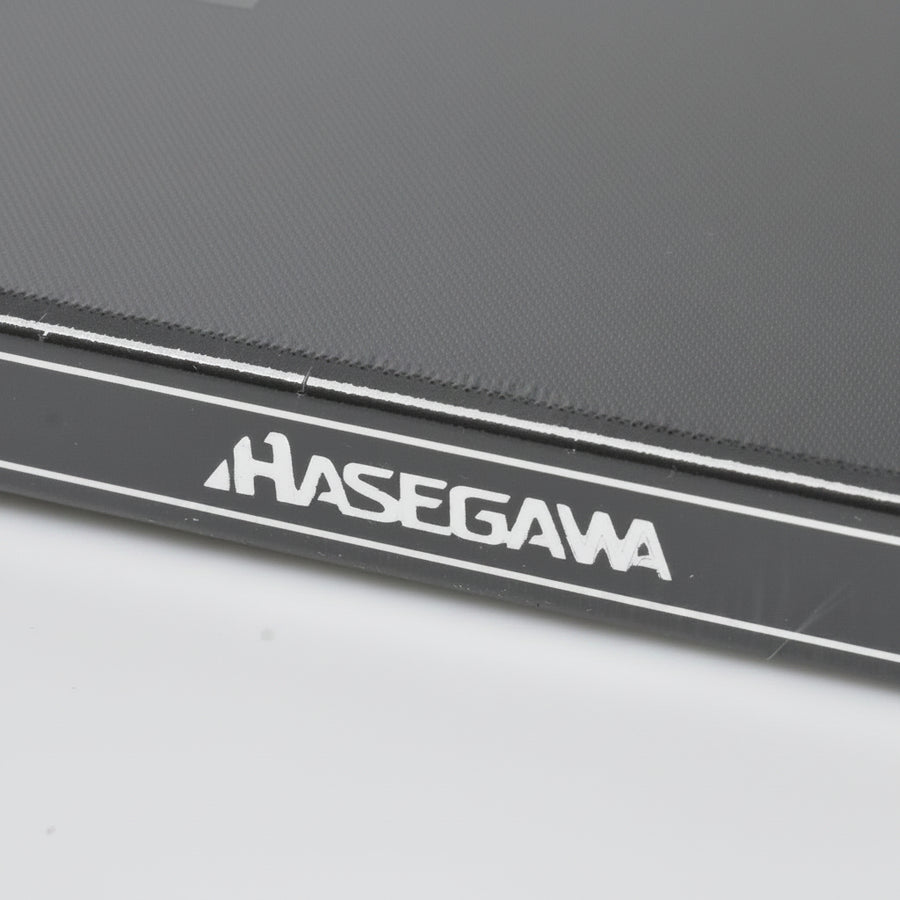
Hasegawa Black Cutting Board 440x290x18mm
Only 4 left in stock
Description
Hasegawa's FPEL black cutting board - the industry-standard professional polyethylene surface.
440 × 290 × 18 mm. Black for visibility on light proteins and white fish, dense enough to handle daily butchery without grooving fast. The cutting board you don't replace for years.
Used in the working kitchens of sushi bars and restaurants that need their surface to hold up.
Make it last.
- Rinse under cold water and scrub along the grain with a soft brush after each use
- Stand vertically to dry - never flat, never overnight in a sink
- Don't use soap - it strips the natural antibacterial oils hinoki is prized for
- Never dishwasher - one cycle and the wood splits
- Plane the surface flat when it warps; sand 220 then 400 to refresh stains
Before you buy.
Why hinoki and not maple / walnut?
Hinoki (Japanese cypress) is the traditional sushi-bar board. It's softer than maple, so it gives slightly under the edge - extending the life of the blade. Antibacterial oils in the wood resist mold even in a wet kitchen.
How do I season a new hinoki board?
Soak both sides in cold water for 30 minutes before first use - it stops blood and fat from staining the wood. After every use: rinse under cold water, scrub with a soft brush along the grain, stand vertically to dry. Don't use soap; it strips the natural oils.
Can I put it in the dishwasher?
Never. The heat will split the wood within one cycle, and the detergent kills the antibacterial properties hinoki is prized for.
What about end-grain vs. flat-grain?
End-grain boards are softer on the edge but heavier and pricier. Flat-grain is what every working sushi bar uses - lighter, easier to clean, easier to plane flat if it warps.
Will it stain?
Hinoki yellows slightly with use - the surface oxidises. To bring it back: plane the surface with a hand plane (a job for a craftsman) or sand with 220-grit and finish with 400. We do this service for boards bought from us, by mail, for cost.

More from Cutting Boards
View all Sale
Sale

