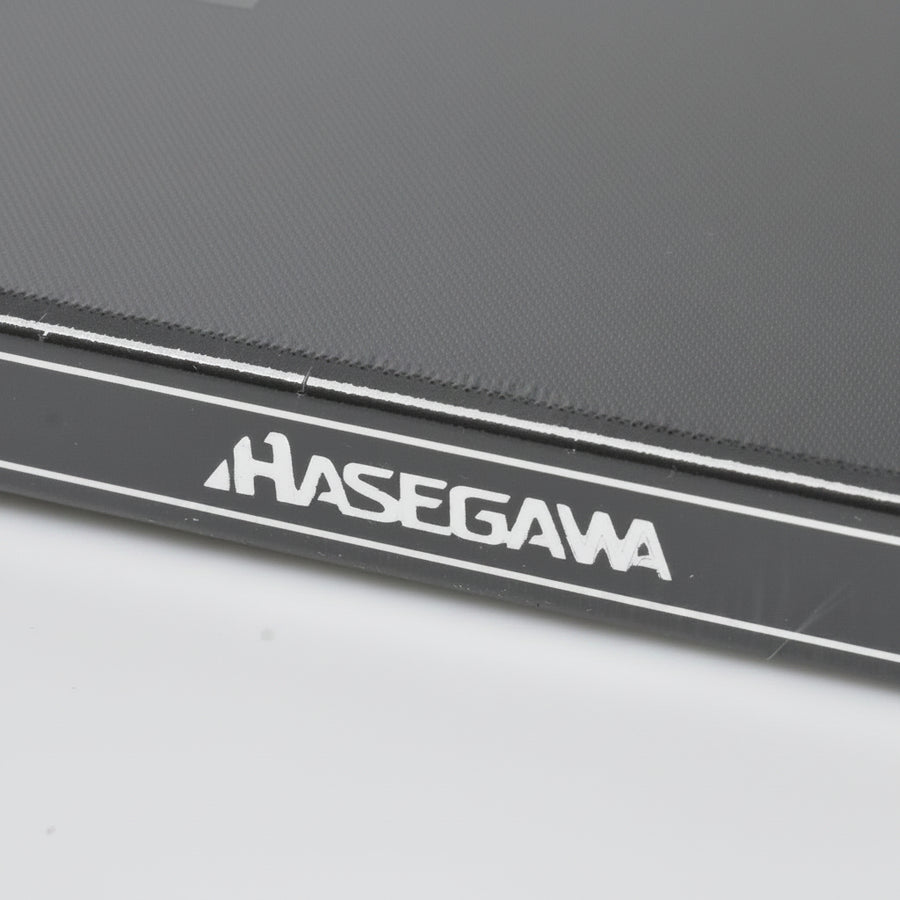
Hasegawa Black Cutting Board 460x260x18mm
✓ In stock · Ships from Prague
Description
The narrower of the FPEL black cutting boards. 460 × 260 × 18 mm.
Same professional polyethylene as its wider sibling, oriented for chefs who want depth on one axis and a longer slice on the other. Black for contrast on white-fleshed fish. Industry-standard density and longevity.
Make it last.
- Rinse under cold water and scrub along the grain with a soft brush after each use
- Stand vertically to dry - never flat, never overnight in a sink
- Don't use soap - it strips the natural antibacterial oils hinoki is prized for
- Never dishwasher - one cycle and the wood splits
- Plane the surface flat when it warps; sand 220 then 400 to refresh stains
Before you buy.
Why hinoki and not maple / walnut?
Hinoki (Japanese cypress) is the traditional sushi-bar board. It's softer than maple, so it gives slightly under the edge - extending the life of the blade. Antibacterial oils in the wood resist mold even in a wet kitchen.
How do I season a new hinoki board?
Soak both sides in cold water for 30 minutes before first use - it stops blood and fat from staining the wood. After every use: rinse under cold water, scrub with a soft brush along the grain, stand vertically to dry. Don't use soap; it strips the natural oils.
Can I put it in the dishwasher?
Never. The heat will split the wood within one cycle, and the detergent kills the antibacterial properties hinoki is prized for.
What about end-grain vs. flat-grain?
End-grain boards are softer on the edge but heavier and pricier. Flat-grain is what every working sushi bar uses - lighter, easier to clean, easier to plane flat if it warps.
Will it stain?
Hinoki yellows slightly with use - the surface oxidises. To bring it back: plane the surface with a hand plane (a job for a craftsman) or sand with 220-grit and finish with 400. We do this service for boards bought from us, by mail, for cost.

More from Cutting Boards
View all Sale
Sale

